




Jewellery making is a workmanship that has been around for a long time, however has become a lot simpler and more open thanks to 3D printing. You can now make your own jewelry from scratch using any of the many 3D software programs that are available on the market with a little knowledge of computer graphics.
Zbrush is one of the most interesting and well-liked 3D software programs for making jewelry. It is known for its ability to create intricate, complex designs. Zbrush is the software of choice for jewelry artists looking for complex, intricate, and detailed designs because it can create stunningly detailed designs that would be impossible to recreate otherwise. If you want intricate and detailed jewelry, Zbrush is the way to go.
Regardless of the size of the object, the proprietary technology of Zbrush makes it possible to create extremely intricate and detailed sculptures.
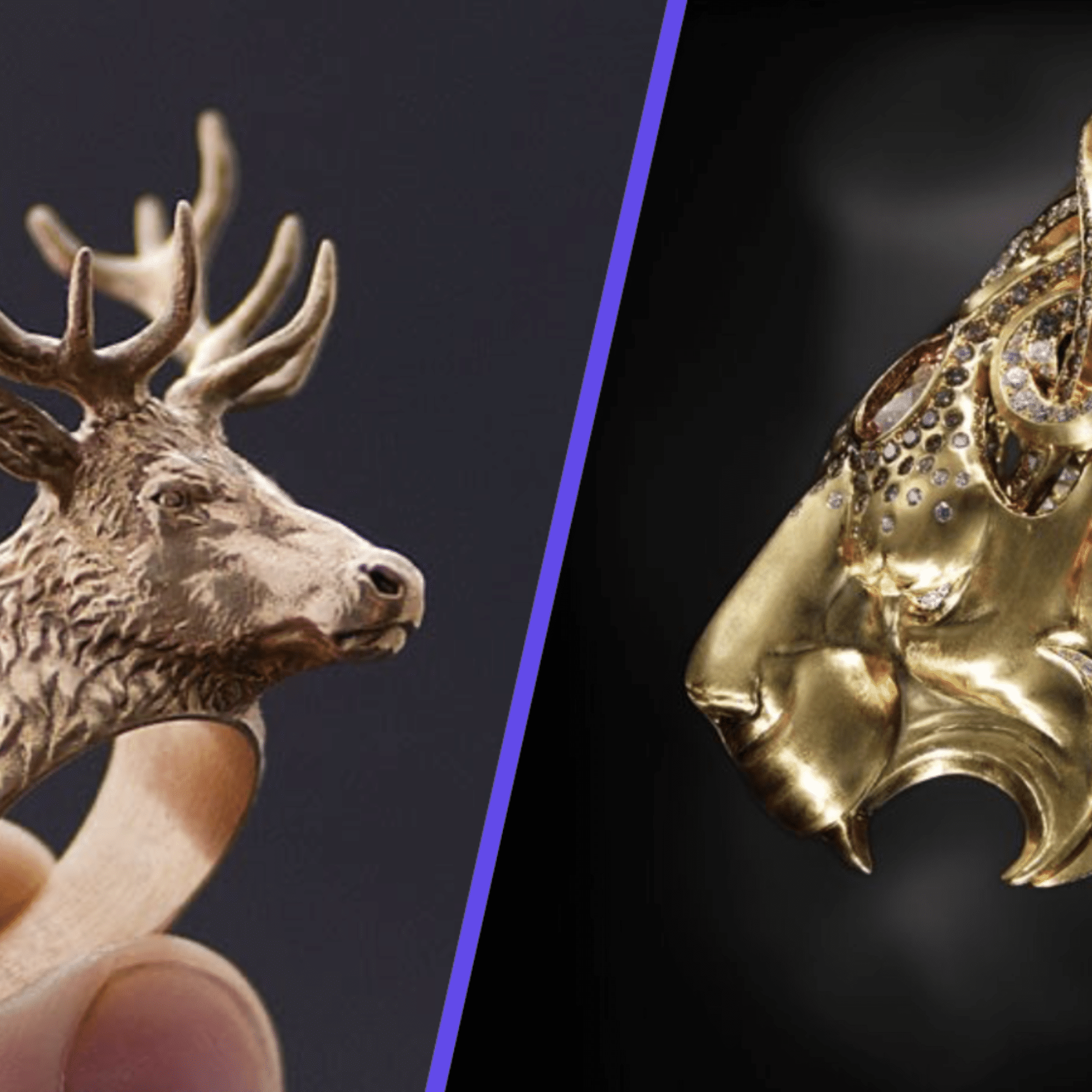
This is perfectly demonstrated by the pendant above, which is shaped like a bear’s claw. Russian artist Nikolay Vorobyov designed and created the pendant.

Initially, he used 3D software to create a digital model of the pendant. After that, this digital model was used to make a mold, which was then used to make a gold casting of the pendant.
This pendant is a delightful illustration of what can be made while consolidating current chiseling strategies with customary goldsmithing procedures.
Modern jewelry artist Jack DuRose is a big fan of Zbrush and all of its benefits. “Zbrush has allowed me to create organic patterns that could previously only have been created by carving on clay,” he states. The artistic liberty to control individual components, providing the work with an ideal feeling of equilibrium and development is unrivaled. Compared to other jewelry-specific CAD software, the workflow is much more flexible.
Over the years, Zbrush has continued to incorporate more and more tools, operations, and functions aimed at the skilled “craftsmanship” of 3D meshes. These include Boolean operations, the management of complex patterns with tools like Dynamesh, IMM brushes for inserting new objects on the surface for “decoration,” and direct export for 3D printing.
Some impressive outcomes have been achieved by putting this brand-new method of comprehending the craft of jewelry making into practice.

A. Sasikumar, a Zbrush artist and jewelry designer, won the Jaipur Jewlery Choice Design Award for his stunning Zbrush-only necklace. The creation’s intricate and expertly sculpted details are two aspects that have greatly benefited from Zbrush’s inherent characteristics. The necklace that Sasikumar made is a great illustration of the amazing things that can be made with Zbrush. The fact that it was entirely created in Zbrush makes the incredible level of detail and craftsmanship even more impressive. This is a genuinely unimaginable accomplishment, and it simply demonstrates what’s conceivable with this astonishing programming.
On the opposite side of the world, in California, universally acclaimed gems fashioner Dilek Sezen is utilizing Zbrush to make very cutting edge or potentially particular wearable embellishments. Sezen is pushing the boundaries of jewelry design with Zbrush, and her creations are truly one-of-a-kind and stunning. Visit the official Zbrush forum at if you want to see some of her work:
Because of the artistic talent of forward-thinking and contemporary minds, this world and the art field are being counted and asserted. The potentialities of 3D are forcing a forcible revolution in the discipline of art.
Obviously even the world’s most settled specialists are meaningfully impacting the manner in which they work, because of the astounding capability of 3D innovation. What’s more, it’s all because of the vision and ability of the craftsmen who are utilizing it to its maximum capacity.
Watch this helpful tutorial created by Grace Note Forge to discover the potential of 3D printing for jewelry making :
So what are you going to do with this new power?